Professor Eunyu Kim Participates as Co-Author of The Rise and Future Prospects of China's Science and Technology 2026
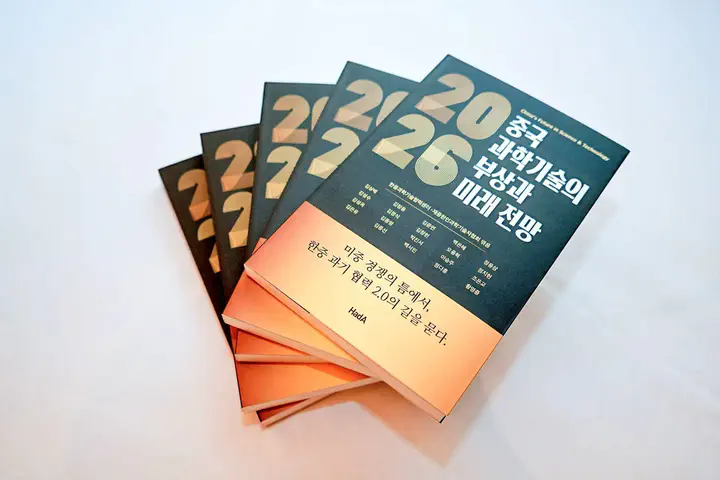 Cover and printed copies of The Rise and Future Prospects of China’s Science and Technology 2026
Professor Eunyu Kim of Duke Kunshan University participated as a co-author of The Rise and Future Prospects of China’s Science and Technology 2026, jointly published by the Korea-China Science and Technology Cooperation Center and the Korean Scientists and Engineers Association in China. Professor Kim contributed the chapter “Environmental Genomics Research Strategies as a Solution in the Era of Climate Crisis,” analyzing China’s environmental genomics strategy and its implications for Korea-China cooperation.
📖 Book co-published by the Korea-China Science and Technology Cooperation Center and the Korean Scientists and Engineers Association in China 🎉 Book launch held during the 10th Anniversary General Assembly of the Korean Scientists and Engineers Association in China
Professor Eunyu Kim of Duke Kunshan University participated as a co-author of The Rise and Future Prospects of China’s Science and Technology 2026, jointly published by the Korea-China Science and Technology Cooperation Center and the Korean Scientists and Engineers Association in China.
Published on November 28, 2025, the book provides a comprehensive outlook on China’s science and technology landscape. It examines China’s growing innovation capacity, major industrial strategies, and emerging directions for Korea-China cooperation. The volume consists of 20 chapters across four sections, covering key technology areas such as:
- Quantum computing
- Biofoundries
- Secondary batteries
- Artificial intelligence
- Digital supply chains
Professor Kim contributed the chapter titled “Environmental Genomics Research Strategies as a Solution in the Era of Climate Crisis,” included in Part II: “From Foundations to the Future — China’s Science and Technology Ecosystem.” Her chapter analyzes how China is fostering environmental genomics as a core strategic technology for responding to the climate crisis and advancing industrial innovation.
The chapter highlights China’s efforts to integrate the following tools and frameworks to expand applications across agriculture, urban ecosystems, water and coastal management, and industrial bioprocessing:
- Metagenomic data
- Artificial intelligence
- Digital twin technologies
- The DBTL cycle — Design, Build, Test, and Learn
Professor Kim’s contribution further emphasizes that China’s environmental genomics strategy extends beyond basic research — it is evolving into a national strategy that combines data, standards, technology, regulatory systems, and global talent policies. The chapter suggests that Korea should actively explore climate technology innovation, international standardization, and strategic Korea-China cooperation in this rapidly emerging field.
In particular, Professor Kim points out that Korea can strengthen its global leadership in environmental genomics and climate technology by:
- Building on its strengths in precision breeding, smart farming, water treatment, and bioprocessing
- Expanding large-scale demonstration projects
- Advancing DBTL automation and digital twin-based field applications
The book launch was held in conjunction with the 10th Anniversary General Assembly of the Korean Scientists and Engineers Association in China, bringing together Korean scientists, engineers, public-sector representatives, industry experts, and media professionals to discuss recent developments in China’s science and technology ecosystem and the future of Korea-China cooperation.
Professor Kim’s participation as a co-author reflects the expertise and field-based insights of Korean scientists working in China, while also contributing to broader discussions on Korea’s science and technology policy and international cooperation strategy.

Eun Yu Kim
Assistant Professor in Biology
Eunyu Kim’ s principal research interest is understanding how plants cope with environmental stresses to improve crop resilience and develop better crops.